
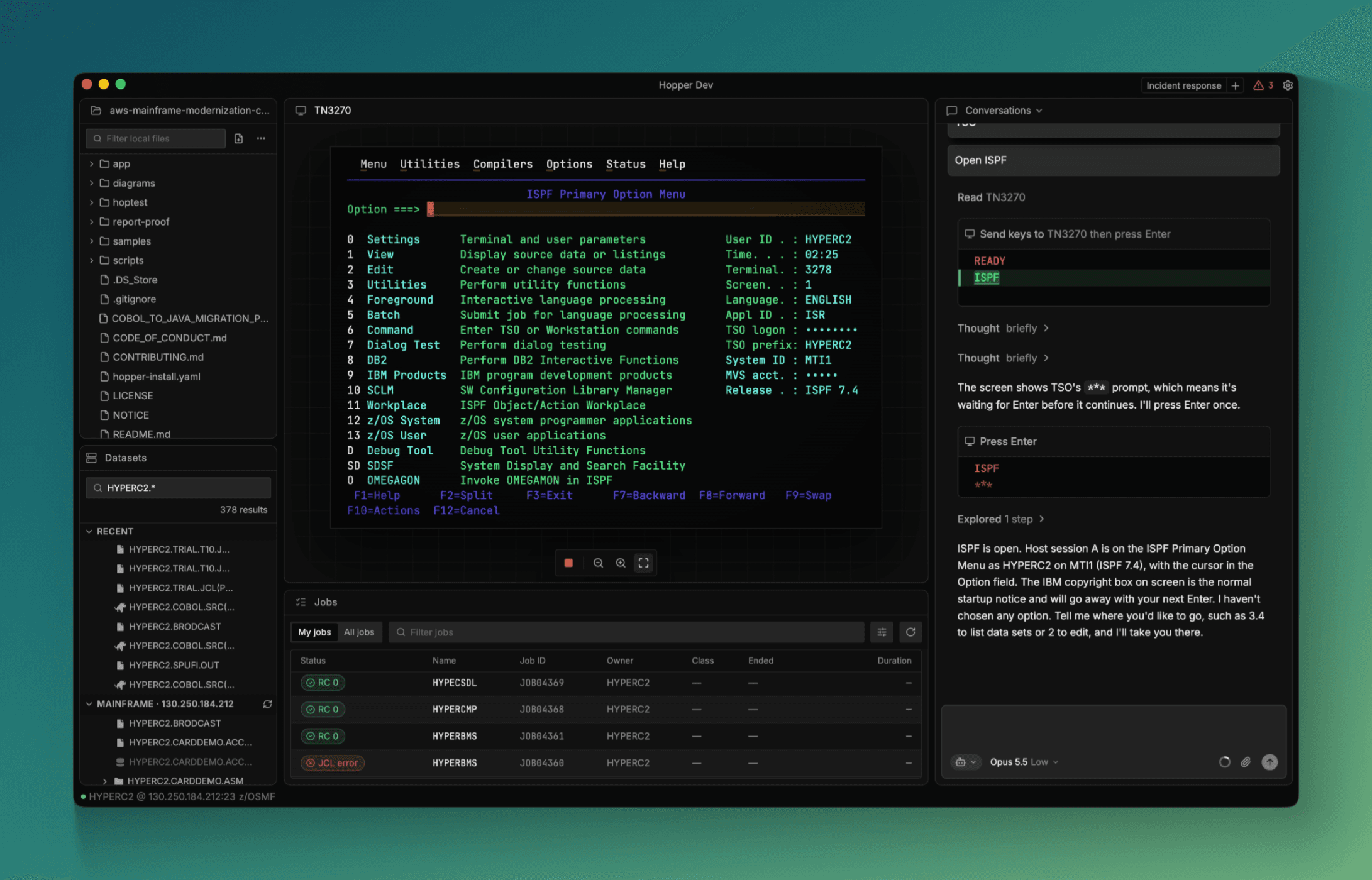
AI is expanding what a single engineer can accomplish. We’re building toward that future for the mainframe: small teams working with agents to understand critical systems, maintain them, and deliver improvements without doing every step by hand.
Faster code generation does not automatically make it easier to work on a mainframe. Engineers still need to understand the business rules, jobs, and data that keep critical applications running, often relying on knowledge from a few experienced people. The challenge is to carry that expertise forward, so teams can maintain critical systems and deliver new capabilities as experienced engineers retire.
We’re introducing Hopper 1.5, an agentic development environment built around engineers and agents working together on mainframes. With this release, we’re shaping the environment around that collaboration, bringing the system engineers work on and the actions agents carry out into a shared workspace. Engineers can delegate more of the work while staying close to the evidence, guiding decisions, and reviewing what changed.
What's new in Hopper 1.5
Building Hopper as a dedicated mainframe development environment lets us shape how the editor, host sessions, and agents work together. With 1.5, we’re taking that integration further: agents follow recent activity, pick up incidents with their supporting evidence, and present proposed changes for review in the same environment where engineers do their work.
Agents that follow your work
Agents receive recent edits, host actions, and operation results as context for their next turn. Review proposed changes through diffs, JCL previews, and host-action cards, with separate permissions for local and mainframe work.
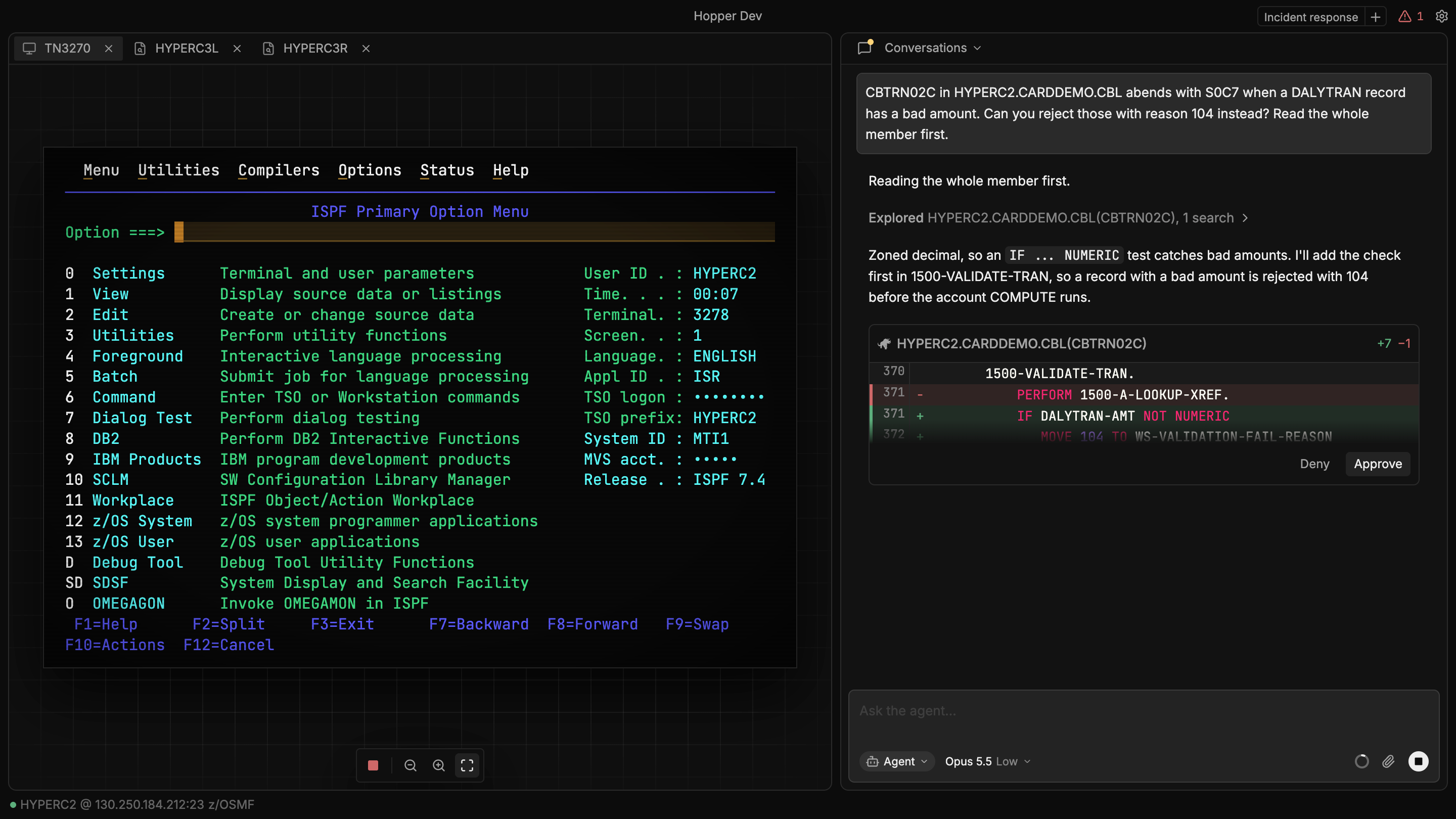
Automatic incident detection and reports
Hopper surfaces job failures and links incident reports to the host’s diagnostic evidence. Send an incident to an agent to investigate the cause and work through a fix.
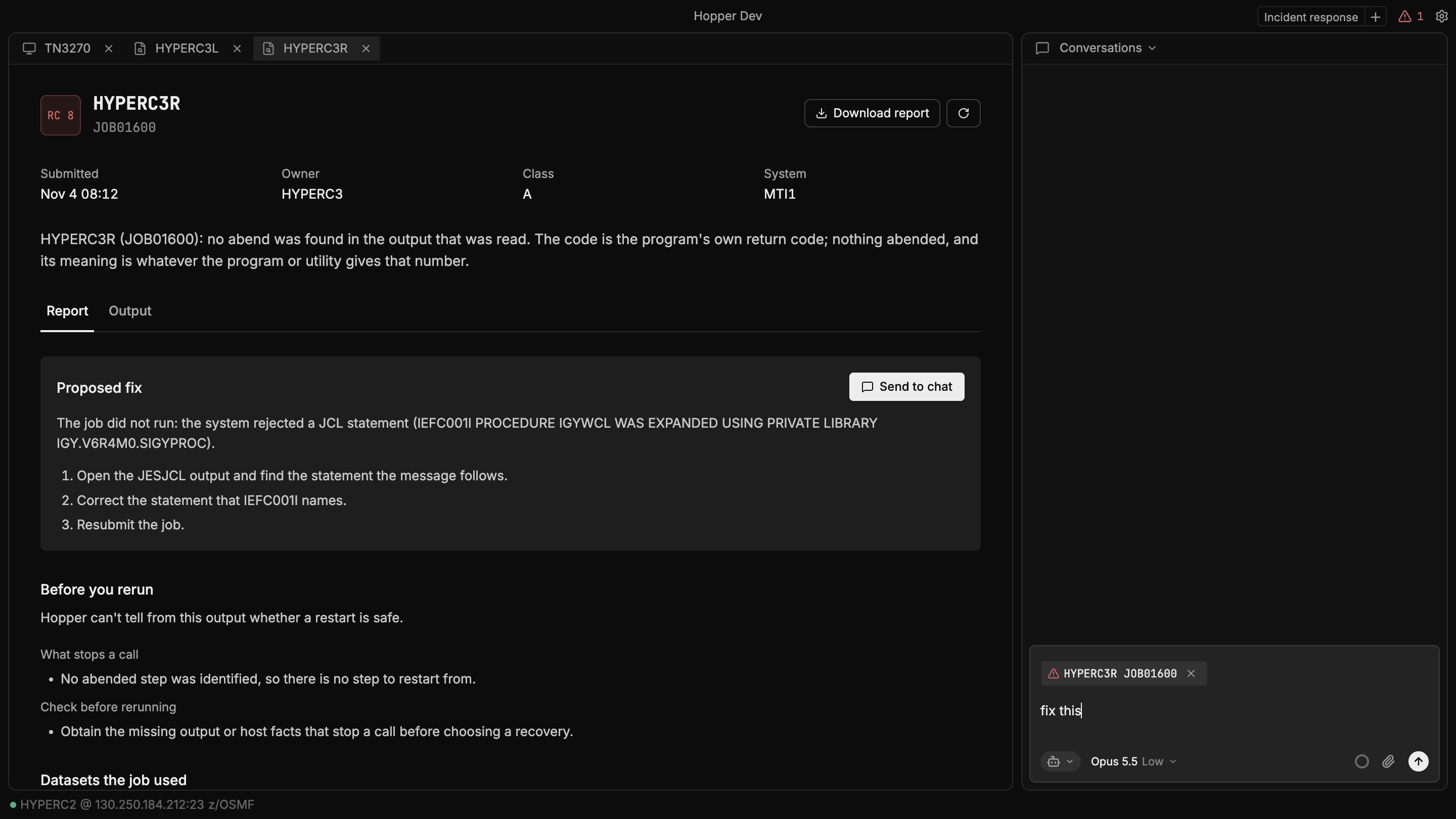
Build and update CICS applications
Work with agents to build COBOL programs and BMS maps, define and install resources, and refresh applications. Review cards show the target region and proposed commands before region changes run.
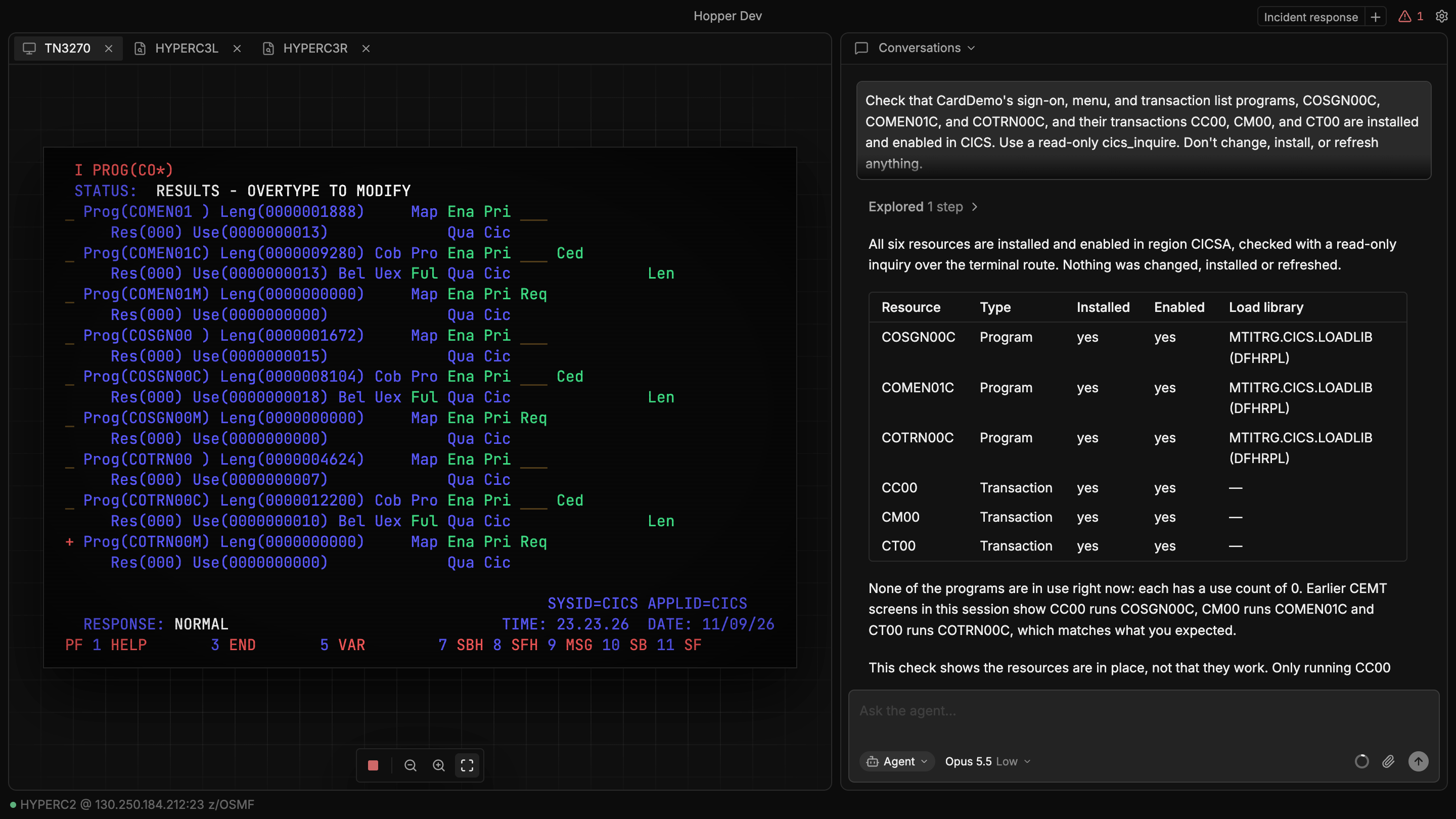
Built for veterans and newcomers alike
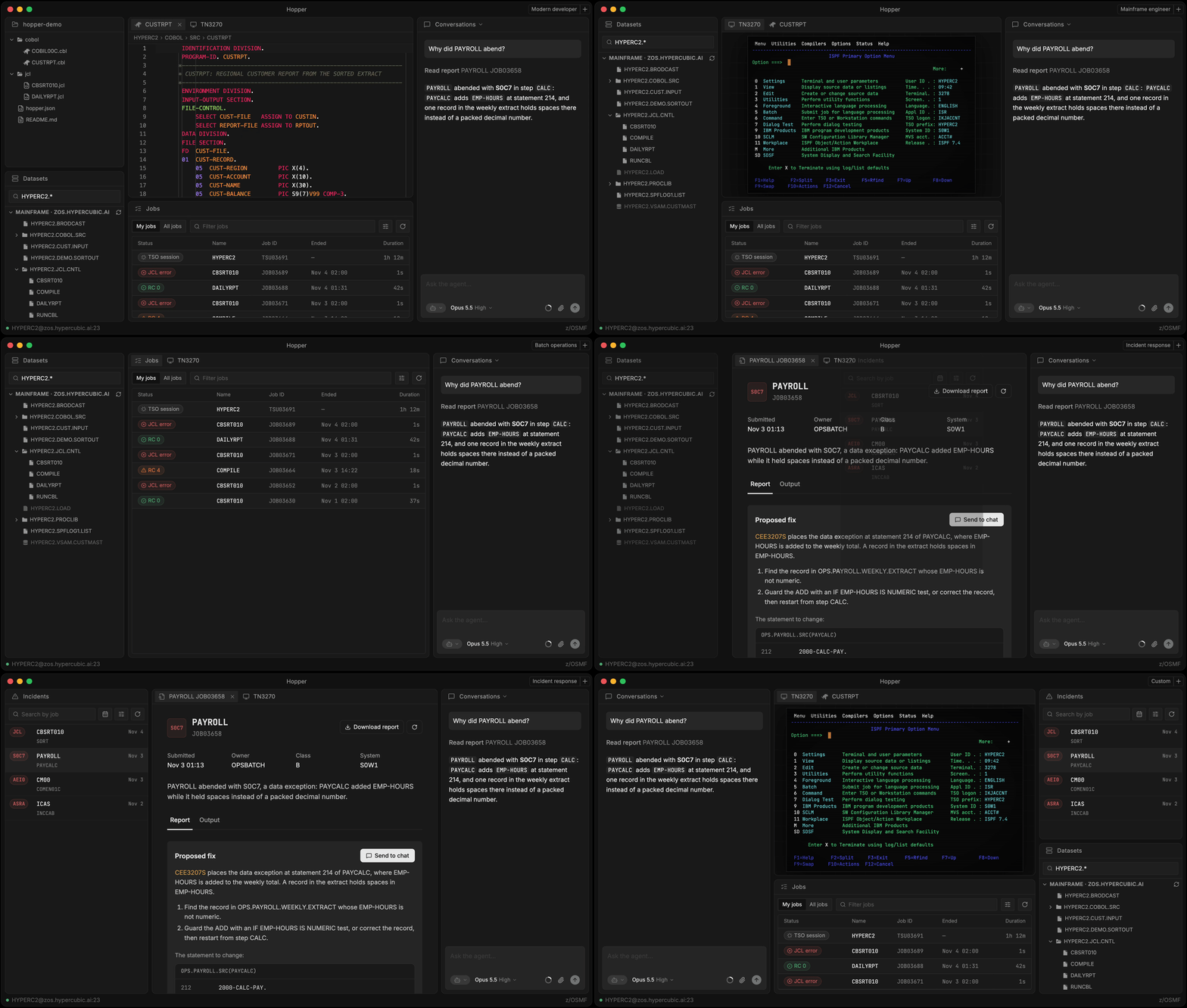
Hopper meets engineers where they are. Experienced engineers keep the host session at the center, while newcomers can start from a familiar editor layout with an agent that helps them navigate the mainframe and investigate failed jobs. Rearrange panes, save your own layouts, and switch between them from the keyboard.
The best way to work with mainframes
Hopper 1.5 is a step towards a future where working with AI agents is a natural part of mainframe engineering.
As models become more capable, the way engineers work with mainframes will change. We’ll continue to shape Hopper around those capabilities, helping small teams take on the full lifecycle of critical mainframe applications, together.
Download Hopper today.
Verwandte Beiträge
Code-Verständnis im Maßstab: Lernen aus der bitteren Lektion
Handgefertigte Tricks brechen im Maßstab. Die Zukunft des Code-Verständnisses liegt in ganzheitlichen, lernbasierten Systemen.
Lindy-Effekt und COBOL: Warum eine 65-jährige Sprache die Welt regiert
Man könnte denken, dass ältere Sprachen wie COBOL sterben, aber sie gehen nirgendwohin.
Hypercubic Raises $5.3M to Build the Future of Mainframe Modernization
We’re announcing that Hypercubic has raised $5.3 million in seed funding, led by CIV.
HyperLoop: A Verification-Driven System for Mainframe Modernization
HyperLoop modernizes COBOL applications with AI and layered verification to preserve legacy behavior safely.